
Managing meetings and appointments across different time zones can be tricky. This is where an RTI scheduler comes in handy. An RTI scheduler is a smart tool designed to help businesses, teams, and individuals plan events without worrying about time zone differences. In this article, we will explore how an RTI scheduler handles time zones, why it is essential, and how it ensures smooth scheduling for global users.
Table of Contents
Why Time Zone Management Matters in Scheduling
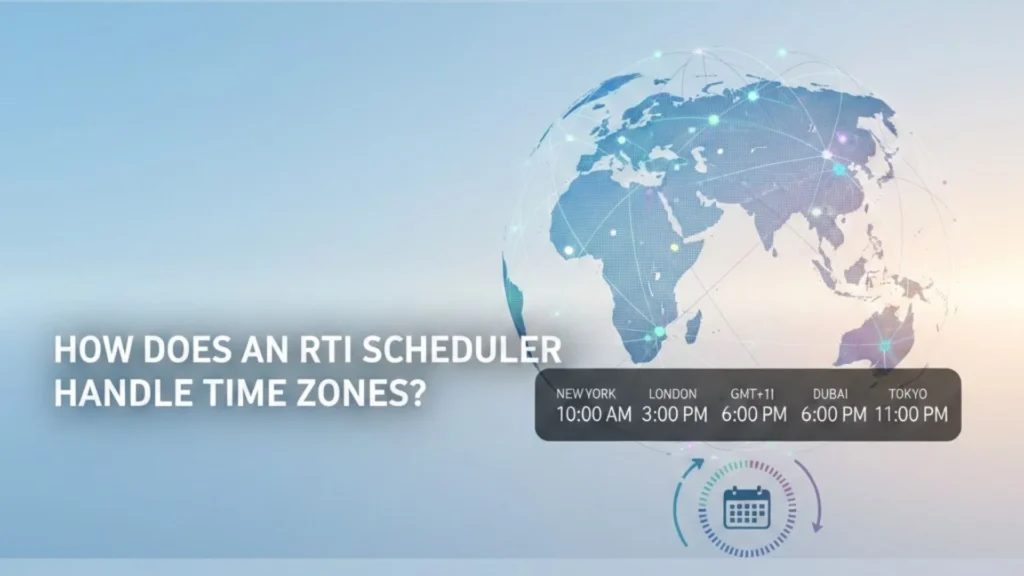
Time zone management is a critical feature for any scheduler because incorrect timing can lead to missed meetings, confusion, and reduced productivity. For example, if a manager in New York schedules a meeting for 10 AM EST, an employee in London might miss it if the scheduler does not convert it to 3 PM GMT automatically. This is exactly where an RTI scheduler shines, offering seamless adjustments for all participants.
How RTI Schedulers Automatically Detect Time Zones
Modern RTI schedulers often include automatic time zone detection. They can identify a user’s location through their device settings or IP address. Once the time zone is detected, the scheduler converts the meeting time to match the participant’s local time. For instance, if a webinar is scheduled for 2 PM PST, a participant in India will see the time as 2:30 AM IST the next day. This prevents manual calculations and human errors.
Manual Time Zone Selection in RTI Schedulers
While automatic detection is convenient, most RTI schedulers also allow users to manually select their preferred time zone. This is especially useful for people traveling or using devices with incorrect time settings. Manual selection ensures that the meeting time remains accurate, regardless of the participant’s location. Users can choose their time zone from a simple dropdown menu and confirm their availability.
Handling Daylight Saving Time Changes
Daylight Saving Time (DST) can complicate scheduling, as clocks move forward or backward in certain regions. An RTI scheduler handles DST changes automatically by updating meeting times based on the local DST rules. For example, if a meeting is scheduled in California during DST, the scheduler will adjust the time accordingly for participants in countries that do not follow DST. This feature reduces confusion and ensures meetings happen on time.
Visual Time Zone Conversion Tools
Some RTI schedulers provide visual tools that help users understand time differences easily. These tools may include world clocks, time zone maps, or comparative timelines that show all participants’ local times at a glance. Visual aids make it simple for teams working globally to find suitable meeting slots without sending multiple emails or using external time conversion tools.
Synchronizing Calendars Across Time Zones
An important feature of an RTI scheduler is calendar synchronization. It connects with popular calendar apps like Google Calendar, Outlook, and Apple Calendar. When a meeting is scheduled, the time is automatically adjusted for each participant’s calendar based on their time zone. This ensures that everyone receives notifications at the correct local time, eliminating the risk of missed appointments.
Benefits of Using an RTI Scheduler for Global Teams
Using an RTI scheduler to handle time zones offers several benefits. It saves time by eliminating manual calculations, reduces errors, and ensures clear communication. Teams spread across continents can coordinate efficiently, increasing productivity. Businesses hosting webinars or online classes can attract a global audience without worrying about confusing schedules.
Best Practices for Using an RTI Scheduler with Multiple Time Zones
To make the most of an RTI scheduler, follow these tips:
- Always confirm your device’s time zone settings before scheduling meetings.
- Encourage participants to use automatic time zone detection if available.
- Double-check meeting times when DST changes occur.
- Use visual time zone tools to compare multiple participants’ local times.
- Sync all scheduled events with your preferred calendar app.
By following these steps, you can ensure that your meetings run smoothly, regardless of where your participants are located.
Real-Life Example: Scheduling an International Webinar
Imagine you are hosting an international webinar with attendees from New York, London, and Tokyo. Without an RTI scheduler, you would have to manually calculate each participant’s time zone and communicate it through emails. With an RTI scheduler, the process is effortless. You set the webinar time in your local time zone, and the scheduler automatically converts it to match the local time for each attendee. Participants can see the correct time instantly, reducing confusion and improving attendance.
Future of RTI Schedulers in Time Zone Management
As remote work and global collaboration continue to grow, the importance of accurate time zone handling in scheduling tools will increase. Future RTI schedulers may include AI-powered recommendations for optimal meeting times based on participants’ locations, availability, and past scheduling behavior. These advanced features will make scheduling faster, smarter, and even more user-friendly.
FAQs
How does an RTI scheduler detect my time zone?
An RTI scheduler detects your time zone automatically using your device settings or IP address, ensuring that meeting times are shown accurately for your location.
Can I manually set a different time zone in an RTI scheduler?
Yes, most RTI schedulers allow manual time zone selection, which is helpful if your device has incorrect settings or you are traveling.
Does an RTI scheduler handle Daylight Saving Time changes?
Absolutely. An RTI scheduler automatically adjusts meeting times for DST changes, preventing confusion for participants in regions with different DST rules.
Can I sync an RTI scheduler with my calendar?
Yes, RTI schedulers often integrate with Google Calendar, Outlook, and Apple Calendar, automatically converting meeting times to each participant’s local time.
Why is using an RTI scheduler for global teams beneficial?
Using an RTI scheduler reduces manual calculations, prevents scheduling errors, and ensures everyone sees the correct meeting time, improving coordination across time zones.