
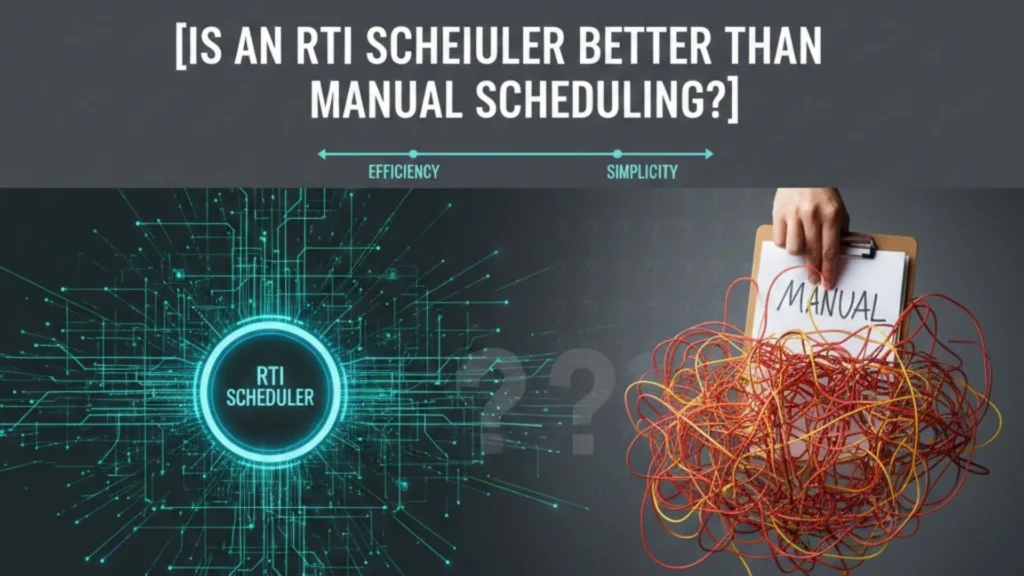
Scheduling meetings, interviews, and calls sounds simple, but in reality, it often becomes one of the most frustrating parts of daily work. Endless email chains, missed messages, time zone confusion, and last-minute changes can waste hours every week. This is where many people start asking an important question: is an RTI scheduler better than manual scheduling?
This article explores that question in a clear and practical way. You will learn what an RTI scheduler is, how it compares to manual scheduling, and which option works better in different situations. Whether you run a small business, manage a team, recruit candidates, or book client calls, this guide will help you understand the real value of an RTI scheduler and decide if it fits your needs.
Table of Contents
Understanding Manual Scheduling in Everyday Work
What manual scheduling really looks like
Manual scheduling is the traditional way of setting up meetings. It usually involves emails, messages, or phone calls where people suggest times back and forth until everyone agrees. In small teams or personal situations, this method may feel natural and manageable.
However, as soon as you deal with multiple people, different time zones, or tight schedules, manual scheduling becomes slow and confusing. One person suggests a time, another is unavailable, and the process starts all over again. Important conversations can be delayed simply because calendars do not align easily.
Why people still use manual scheduling
Many people continue to rely on manual scheduling because it feels familiar and does not require learning a new system. Some believe that tools add unnecessary complexity or cost. Others prefer the personal touch of direct communication.
While these reasons make sense, they often overlook the hidden cost of time and energy spent on coordination. Manual scheduling works best only when scheduling needs are rare and simple.
What Is an RTI Scheduler and How Does It Work?
The basic idea behind an RTI scheduler
An RTI scheduler is a real-time intelligent scheduling system that connects directly with calendars and availability data. Instead of guessing or asking for free time, it shows available slots instantly and allows meetings to be booked without back-and-forth communication.
The focus keyword RTI scheduler refers to this ability to update and reflect availability in real time. When someone books a slot, calendars are updated immediately, reducing conflicts and errors.
How real-time scheduling changes the process
With an RTI scheduler, one person shares a scheduling link. The other person selects a time that works from the available options. Confirmation happens automatically, and reminders can be sent without manual follow-up.
This approach removes delays and creates a smoother experience for both sides. It is especially useful for interviews, sales calls, customer support sessions, and remote team meetings.
Comparing RTI Scheduler and Manual Scheduling Side by Side
Time efficiency and speed
One of the biggest differences between an RTI scheduler and manual scheduling is speed. Manual scheduling can take days to finalize a single meeting. An RTI scheduler can complete the same task in minutes.
By showing real-time availability, the RTI scheduler eliminates unnecessary messages. This time saving adds up quickly, especially for professionals who schedule multiple meetings each week.
Accuracy and reduced errors
Manual scheduling relies heavily on memory and attention. People forget to update calendars, double-book slots, or mix up time zones. These mistakes lead to missed meetings and frustration.
An RTI scheduler reduces these risks by syncing directly with calendars. Real-time updates ensure that availability is always accurate, making scheduling more reliable.
Read More: How Does an RTI Scheduler Improve Interview Scheduling?
User experience for both sides
From the perspective of the person booking the meeting, manual scheduling often feels slow and awkward. It requires waiting for replies and negotiating times.
An RTI scheduler offers a smoother experience. The process feels simple, respectful of time, and professional. This improved experience can leave a positive impression, especially in business or recruitment settings.
When Manual Scheduling Still Makes Sense
Small teams and informal meetings
Manual scheduling is not always a bad choice. In small teams where everyone works closely together, quick messages may be enough. Informal meetings that do not require strict timing can be scheduled manually without much trouble.
In such cases, the simplicity of manual scheduling may outweigh the benefits of using a tool.
Situations requiring flexibility and discussion
Some meetings require discussion before setting a time. For example, sensitive conversations or creative sessions may benefit from a more personal approach. Manual scheduling allows people to talk through preferences and context.
Even in these cases, some teams use an RTI scheduler after the initial discussion to finalize details smoothly.
Why Businesses Are Moving Toward RTI Schedulers
Growing demand for efficiency
As businesses grow, scheduling becomes more complex. Multiple team members, clients, and partners all need access to shared time slots. Manual methods simply do not scale well.
An RTI scheduler supports growth by handling increased scheduling volume without additional effort. This makes it a valuable tool for startups and established companies alike.
Better use of human resources
Time spent on scheduling is time not spent on productive work. HR teams, recruiters, and managers often lose hours coordinating interviews.
By using an RTI scheduler, these teams can focus on meaningful tasks instead of administrative work. The result is better productivity and less burnout.
RTI Scheduler Benefits for Specific Use Cases
Hiring and recruitment
Recruitment involves constant coordination between candidates and interviewers. Manual scheduling can delay the hiring process and create a poor candidate experience.
An RTI scheduler simplifies interview booking by allowing candidates to choose available slots instantly. This faster process can improve hiring outcomes and reflect positively on the company.
Sales and client meetings
Sales teams rely on timely conversations. Delays in scheduling can lead to lost opportunities. An RTI scheduler helps prospects book calls quickly while interest is high.
This ease of access can increase conversion rates and improve client satisfaction.
Remote teams and global collaboration
Remote work has made scheduling more challenging due to time zone differences. Manual scheduling often leads to confusion and mistakes.
An RTI scheduler automatically adjusts for time zones and displays correct availability, making global collaboration much easier.
Addressing Common Concerns About RTI Schedulers
Learning curve and setup
Some people worry that using an RTI scheduler will be complicated. In reality, most tools are designed to be user-friendly and require minimal setup.
Once connected to a calendar, the system handles most tasks automatically. The initial learning effort is usually small compared to the long-term benefits.
Cost considerations
Another concern is cost. While some RTI scheduler tools require payment, many offer free plans or affordable options.
When compared to the value of time saved and reduced errors, the cost is often justified, especially for professionals who schedule frequently.
How RTI Schedulers Improve Professional Image
Creating a smooth first impression
The way meetings are scheduled can influence how people perceive you or your organization. Manual scheduling with delays may appear disorganized.
Using an RTI scheduler shows respect for others’ time and presents a professional, modern image. This can build trust before the meeting even begins.
Consistency and reliability
Consistency is key in professional communication. An RTI scheduler ensures that confirmations, reminders, and updates are handled reliably.
This consistency reduces misunderstandings and helps maintain strong relationships with clients and partners.
Choosing Between RTI Scheduler and Manual Scheduling
Evaluating your scheduling needs
The best choice depends on how often you schedule meetings and how complex your scheduling needs are. Occasional meetings may not require advanced tools.
However, if scheduling is a regular part of your workflow, an RTI scheduler can significantly improve efficiency and reduce stress.
Combining both approaches when needed
Some people use a hybrid approach. They rely on manual scheduling for personal or sensitive meetings and use an RTI scheduler for routine bookings.
This flexibility allows you to enjoy the benefits of both methods without feeling restricted.
FAQs
Is an RTI scheduler suitable for small businesses?
Yes, an RTI scheduler works well for small businesses that want to save time and appear professional. It reduces scheduling delays and helps manage growing workloads efficiently.
Can an RTI scheduler replace all manual scheduling?
An RTI scheduler can handle most scheduling tasks, but manual scheduling may still be useful for informal or sensitive meetings that require discussion before booking.
Does using an RTI scheduler feel impersonal?
In most cases, it feels more respectful than impersonal. An RTI scheduler shows that you value others’ time and want to make scheduling easy and clear.
How does an RTI scheduler handle time zones?
An RTI scheduler automatically adjusts available times based on each user’s time zone. This helps prevent confusion and missed meetings in global teams.
Is an RTI scheduler hard to set up and use?
Most RTI scheduler tools are easy to set up and connect with existing calendars. After initial setup, they run smoothly with minimal effort.