
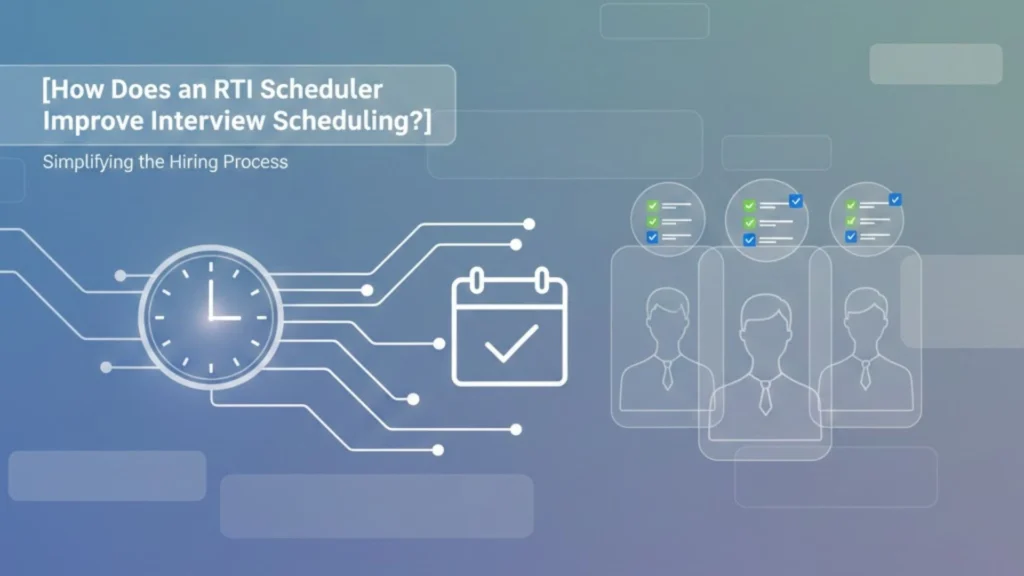
Interview scheduling looks simple on the surface, but anyone who has hired candidates or arranged client meetings knows how complicated it can become. Endless emails, missed calls, time zone confusion, and last-minute changes can slow down the hiring process and frustrate everyone involved. This is where an RTI scheduler becomes extremely useful.
An RTI scheduler is designed to make interview scheduling clear, fast, and reliable. Instead of manually coordinating availability between candidates and interviewers, it provides real-time scheduling that updates instantly. This article explains how an RTI scheduler improves interview scheduling, why it matters for modern businesses, and how it creates a better experience for recruiters, candidates, and hiring teams alike.
Table of Contents
Understanding the Basics of an RTI Scheduler
What an RTI Scheduler Means in Simple Terms
An RTI scheduler is a real-time interview scheduling tool that shows up-to-date availability for interviewers and allows candidates to book suitable time slots instantly. The “real-time” aspect is what makes it powerful. When a slot is booked or changed, everyone sees the update immediately.
Instead of sending emails back and forth asking “Are you free on Tuesday at 2 PM?”, the RTI scheduler handles this automatically. Candidates choose from available slots, and interviewers receive confirmed meetings without manual coordination.
Why Interview Scheduling Is Often a Problem
Interview scheduling becomes difficult because it involves multiple people, busy calendars, and limited availability. Recruiters often manage dozens of interviews at once, which increases the chances of errors.
Common problems include overlapping interviews, delayed responses, forgotten meetings, and confusion across time zones. An RTI scheduler removes these issues by centralizing and simplifying the entire process.
How an RTI Scheduler Improves Interview Scheduling Efficiency
Real-Time Availability Eliminates Guesswork
One of the biggest advantages of an RTI scheduler is real-time availability. Interviewers connect their calendars, and the system displays only the time slots that are actually free.
This means candidates never request times that are already booked. Recruiters no longer need to double-check calendars. The entire scheduling process becomes faster and more accurate.
Faster Scheduling Means Faster Hiring
Speed matters in hiring. When scheduling takes too long, good candidates may lose interest or accept other offers. An RTI scheduler reduces scheduling time from days to minutes.
Candidates can book interviews immediately after receiving an invitation. This quick response keeps them engaged and helps companies move faster in competitive hiring markets.
Read More: What is an RTI Scheduler and Why Is It Important?
Reducing Manual Work for Recruiters and HR Teams
Less Email Back-and-Forth
Recruiters often spend hours each week just coordinating interview times. An RTI scheduler removes this burden by automating the process.
Once the scheduling link is shared, candidates handle the booking themselves. Recruiters can focus on reviewing resumes, preparing interviews, and communicating with hiring managers instead of managing calendars.
Automatic Confirmations and Reminders
An RTI scheduler sends automatic confirmations as soon as an interview is booked. It also sends reminders before the interview takes place.
These reminders reduce no-shows and ensure that both candidates and interviewers are prepared. This small feature has a big impact on interview success rates.
Creating a Better Candidate Experience
Simple and Stress-Free Scheduling
From a candidate’s perspective, interview scheduling can be stressful. Waiting for replies or worrying about proposing the wrong time adds unnecessary pressure.
An RTI scheduler gives candidates control. They can choose a time that fits their schedule without awkward communication. This creates a positive first impression of the company.
Professional Image and Trust Building
Using an RTI scheduler shows that a company values organization and efficiency. Candidates often judge employers by their hiring process.
A smooth scheduling experience builds trust and reflects professionalism. It signals that the company respects the candidate’s time.
Improving Accuracy and Reducing Scheduling Errors
Avoiding Double Bookings
Manual scheduling increases the risk of double bookings, especially when multiple recruiters are involved. An RTI scheduler prevents this by blocking booked slots instantly.
Once a time is taken, it disappears from availability. This ensures that interviewers never have overlapping meetings.
Handling Time Zones Automatically
Time zone confusion is a common problem in remote hiring. An RTI scheduler automatically adjusts times based on the user’s location.
Candidates see interview times in their local time zone, while interviewers see them in theirs. This eliminates missed interviews caused by time misunderstandings.
Supporting Remote and Global Hiring
Ideal for Distributed Teams
Remote work has made global hiring more common. An RTI scheduler is especially helpful for teams spread across different regions.
It allows recruiters to manage interviews across countries without manual time calculations. This flexibility supports modern hiring needs.
Scaling Interview Scheduling as Teams Grow
As companies grow, interview volume increases. Manual scheduling does not scale well.
An RTI scheduler handles high volumes easily. Whether scheduling five interviews or fifty, the process remains smooth and organized.
Integration With Existing Tools and Workflows
Syncing With Calendar Systems
Most RTI scheduler platforms integrate with popular calendar tools. This ensures real-time updates and avoids conflicts.
When interviewers update their personal calendars, availability changes automatically. This keeps scheduling accurate without extra effort.
Supporting Multiple Interview Stages
Hiring often involves several interview rounds. An RTI scheduler can manage different stages by offering separate scheduling links or workflows.
This keeps the hiring process structured and transparent for both candidates and internal teams.
Improving Communication Between Hiring Teams
Centralized Interview Information
An RTI scheduler keeps all interview details in one place. Recruiters, interviewers, and candidates can access the same information.
This reduces miscommunication and ensures everyone knows when and how the interview will take place.
Clear Visibility for Hiring Managers
Hiring managers can see upcoming interviews and schedules without asking recruiters for updates.
This transparency improves collaboration and helps teams prepare better for interviews.
Cost and Time Savings for Businesses
Saving Hours of Administrative Work
By automating scheduling, an RTI scheduler saves recruiters hours each week. This time can be redirected toward strategic hiring tasks.
Reduced administrative work also lowers burnout among HR teams.
Reducing Hiring Delays and Lost Candidates
Delays in scheduling can result in lost talent. An RTI scheduler helps businesses act quickly and secure top candidates before competitors do.
Faster hiring leads to better outcomes and reduced recruitment costs.
Why RTI Scheduler Is Becoming Essential for Modern Hiring
Meeting Candidate Expectations
Today’s candidates expect fast and smooth digital experiences. An RTI scheduler meets these expectations by simplifying communication and scheduling.
Companies that fail to modernize their hiring process risk appearing outdated.
Adapting to Flexible Work Environments
With flexible work hours and remote roles becoming common, fixed scheduling methods no longer work well.
An RTI scheduler adapts to flexible availability and supports modern work styles.
Common Use Cases Beyond Interviews
Sales Calls and Client Meetings
While often used for interviews, an RTI scheduler also works well for sales calls and client consultations.
The same real-time scheduling benefits apply, making it a versatile tool for businesses.
Internal Meetings and Training Sessions
Teams can also use an RTI scheduler for internal meetings or training sessions, reducing scheduling conflicts within organizations.
FAQs
What is an RTI scheduler used for?
An RTI scheduler is used to schedule interviews and meetings in real time by showing live availability. It helps recruiters and candidates book interviews quickly without back-and-forth communication.
How does an RTI scheduler save time?
The RTI scheduler automates availability sharing, confirmations, and reminders. This removes manual coordination and speeds up the entire interview scheduling process.
Is an RTI scheduler suitable for small businesses?
Yes, an RTI scheduler works well for small businesses by reducing administrative work and improving professionalism, even with limited HR resources.
Can an RTI scheduler handle multiple interviewers?
An RTI scheduler can manage multiple interviewers by syncing calendars and showing combined availability, ensuring accurate scheduling for panel interviews.
Does using an RTI scheduler improve candidate experience?
Using an RTI scheduler improves candidate experience by offering simple, flexible scheduling and clear communication, making the hiring process feel smooth and respectful.