
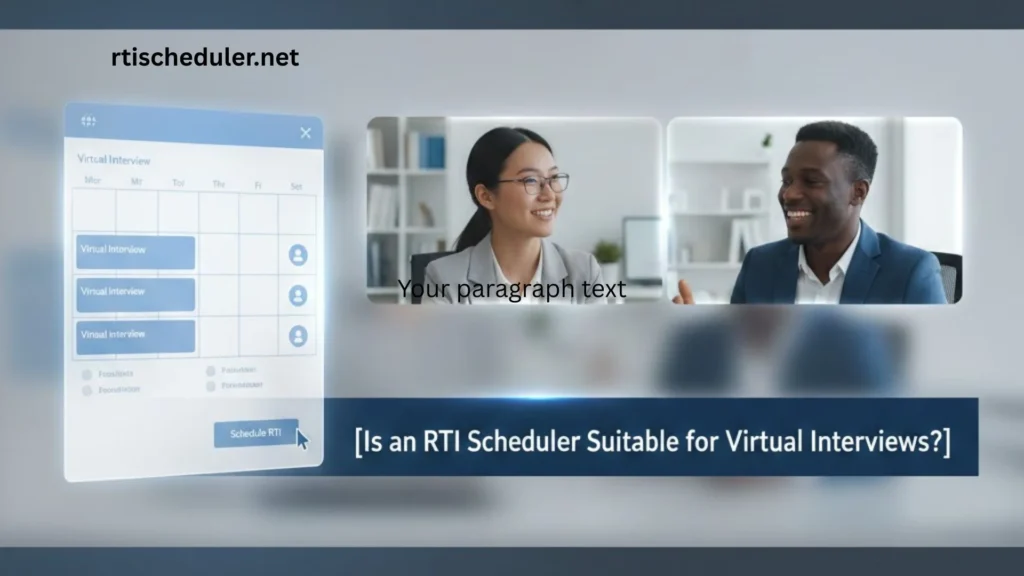
Scheduling interviews has always been a challenging task for recruiters and hiring managers. With the rise of remote work and virtual interviews, managing schedules efficiently has become even more critical. An RTI scheduler offers a smart solution to streamline interview planning, reduce confusion, and save valuable time. In this article, we will explore what an RTI scheduler is, how it works, and why it can be highly beneficial for virtual interviews.
Table of Contents
How an RTI Scheduler Works
An RTI scheduler works by connecting with your existing calendars and providing a real-time view of available slots. Candidates can select a time that works best for them without the need for back-and-forth communication.
The system typically includes features like automated reminders, time zone adjustments, and integration with virtual meeting platforms such as Zoom, Microsoft Teams, or Google Meet. By automating these processes, an RTI scheduler not only saves time but also reduces the chances of no-shows or missed interviews.
Benefits of Using an RTI Scheduler for Virtual Interviews
Improved Time Management
Managing multiple interviews manually can be time-consuming. An RTI scheduler allows recruiters to set their availability, and candidates can choose slots accordingly. This reduces overlapping interviews and ensures that no time is wasted.
Simplified Communication
Instead of sending multiple emails to coordinate schedules, an RTI scheduler provides a single platform for all communication. Candidates receive confirmations, reminders, and updates automatically, making the process smooth and hassle-free.
Increased Candidate Satisfaction
Virtual interviews can be stressful for candidates, especially when scheduling is confusing. Using an RTI scheduler provides flexibility and transparency, which improves the overall candidate experience.
Easy Integration with Virtual Platforms
Modern RTI schedulers integrate seamlessly with video conferencing tools. This means that once a candidate books a slot, the system can automatically generate a virtual meeting link and share it with both the recruiter and candidate.
Reducing Human Error
Manual scheduling is prone to mistakes such as double-booking or missing time zone differences. An RTI scheduler handles these aspects automatically, ensuring accuracy and reliability in the scheduling process.
Challenges Without an RTI Scheduler
Without a proper scheduling tool, virtual interviews can become chaotic. Recruiters may struggle to keep track of multiple time zones, candidates may miss emails, and the overall hiring process can slow down significantly. The lack of organization can lead to frustration for both recruiters and candidates, which may impact the reputation of the company.
An RTI scheduler solves these problems by providing a structured and automated approach. It ensures that interviews are scheduled efficiently, reminders are sent on time, and everyone is on the same page.
Key Features to Look for in an RTI Scheduler
When considering an RTI scheduler for virtual interviews, certain features can significantly enhance the experience:
Automated Scheduling: The system should automatically find suitable time slots for all participants.
Time Zone Management: Candidates and recruiters can be in different locations, so time zone adjustments are essential.
Integration with Calendars: Syncing with Google Calendar, Outlook, or other calendar systems helps prevent conflicts.
Customizable Notifications: Automated reminders ensure that neither party misses the interview.
Reporting and Analytics: Track scheduling patterns and optimize the hiring process over time.
Practical Example of Using an RTI Scheduler
Imagine a company hiring remotely for a global position. Candidates are located in different countries, and recruiters are based in multiple offices. Without an RTI scheduler, coordinating interviews would require numerous emails and manual adjustments.
With an RTI scheduler, recruiters simply set their availability, and candidates pick a time that suits them. The system automatically adjusts for time zones, sends reminders, and generates a virtual meeting link. This streamlined approach saves hours of administrative work and ensures a smooth virtual interview process.
Who Can Benefit from an RTI Scheduler?
An RTI scheduler is suitable for a variety of users, including:
- Recruiters managing multiple candidates and interviewers.
- HR teams looking to automate interview processes.
- Hiring managers who want to reduce scheduling conflicts.
- Companies conducting remote or virtual interviews across different time zones.
By implementing an RTI scheduler, organizations can improve efficiency, reduce human error, and create a better candidate experience.
Common Misconceptions About RTI Schedulers
Some people assume that RTI schedulers are complicated or require technical expertise. In reality, most modern tools are designed for simplicity and ease of use. Even beginners can set up schedules, send invitations, and manage interviews without prior experience.
Another misconception is that these tools are only suitable for large organizations. Small businesses and startups can also benefit from RTI schedulers, especially when they need to coordinate interviews efficiently with limited resources.
Optimizing Virtual Interviews with an RTI Scheduler
To get the most out of an RTI scheduler, consider the following best practices:
- Set clear availability windows: This ensures that candidates only see slots that work for recruiters.
- Send automated reminders: Reduce no-shows and last-minute cancellations.
- Integrate with virtual meeting platforms: Simplify joining instructions for candidates.
- Monitor scheduling patterns: Use analytics to improve the process continuously.
- Provide flexibility: Allow candidates to reschedule if needed, keeping the experience positive.
By following these steps, an RTI scheduler can become an essential tool for running smooth, efficient, and professional virtual interviews.
FAQs
What is an RTI scheduler?
An RTI scheduler is a digital tool that automates interview scheduling, allowing recruiters and candidates to book time slots in real time.
Can an RTI scheduler handle multiple time zones?
Yes, modern RTI schedulers automatically adjust for different time zones, making them ideal for virtual interviews with global candidates.
How does an RTI scheduler improve candidate experience?
By offering flexible scheduling, automated reminders, and clear communication, an RTI scheduler reduces stress and creates a smooth interview process for candidates.
Is an RTI scheduler suitable for small businesses?
Absolutely. Even small teams can benefit from automated scheduling to save time, reduce errors, and improve hiring efficiency.
Can an RTI scheduler integrate with video conferencing tools?
Yes, most RTI schedulers integrate seamlessly with platforms like Zoom, Microsoft Teams, and Google Meet, generating links automatically for virtual interviews.